UPROSE
Stories of Impact
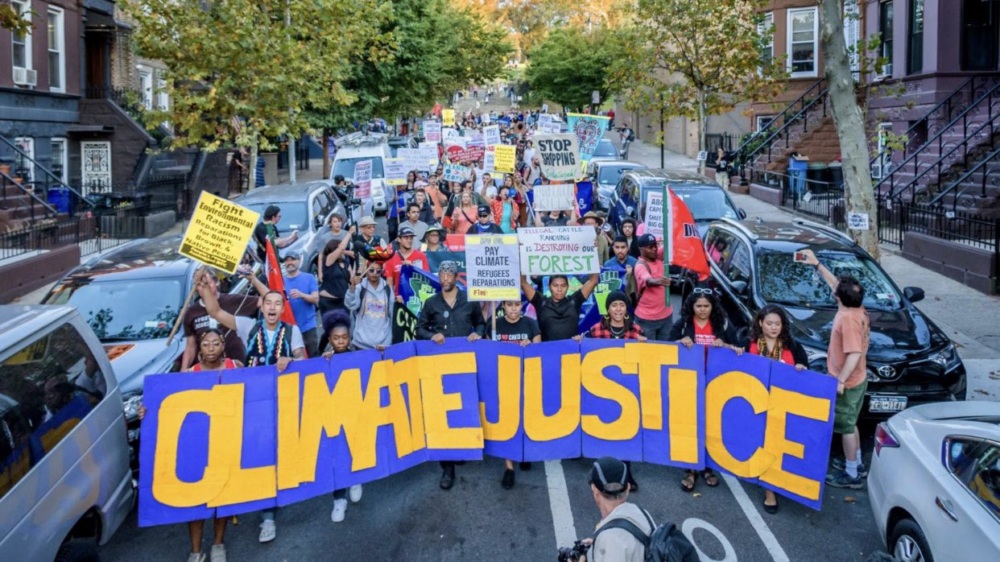
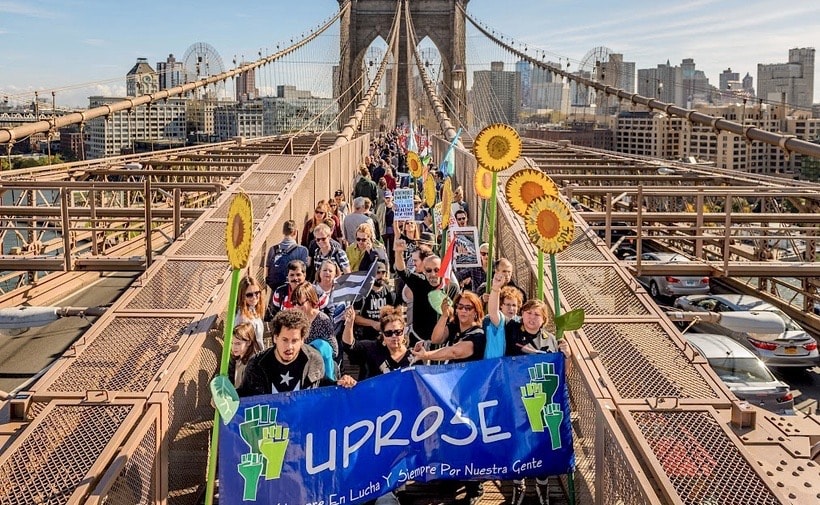
Where does the work of building a more sustainable New York begin? For UPROSE, the answer is hyperlocal. Founded in 1966 as the United Puerto Rican Organization of Sunset Park, UPROSE is Brooklyn’s oldest Latin American community organization as well as one of the city’s most vocal advocates for climate justice.
Initially created to serve the Puerto Rican population of Sunset Park, the group has blossomed into a hub for implementing creative, community driven, and affordable solutions to environmental problems in New York City. Today, UPROSE partners with local leaders to improve the lives of residents both in Sunset Park and beyond.
UPROSE’s lead organizer Annecia Steiniger shared, “We just launched our community-owned solar project, which is the first of its kind in New York City. And right now, it’s offering people 20% savings every month on their electric bill.”
The project in question, known as Sunset City Solar, launched in July of this year and has quickly delivered on its promises. Located on the rooftop of the Brooklyn Army Terminal, the 45,000-square-foot solar grid provides power to 200 Sunset Park families, reduces greenhouse gas emissions, and reinvests additional revenue into a community wealth fund, ensuring that the benefits of renewable energy stay rooted in the neighborhood it serves.
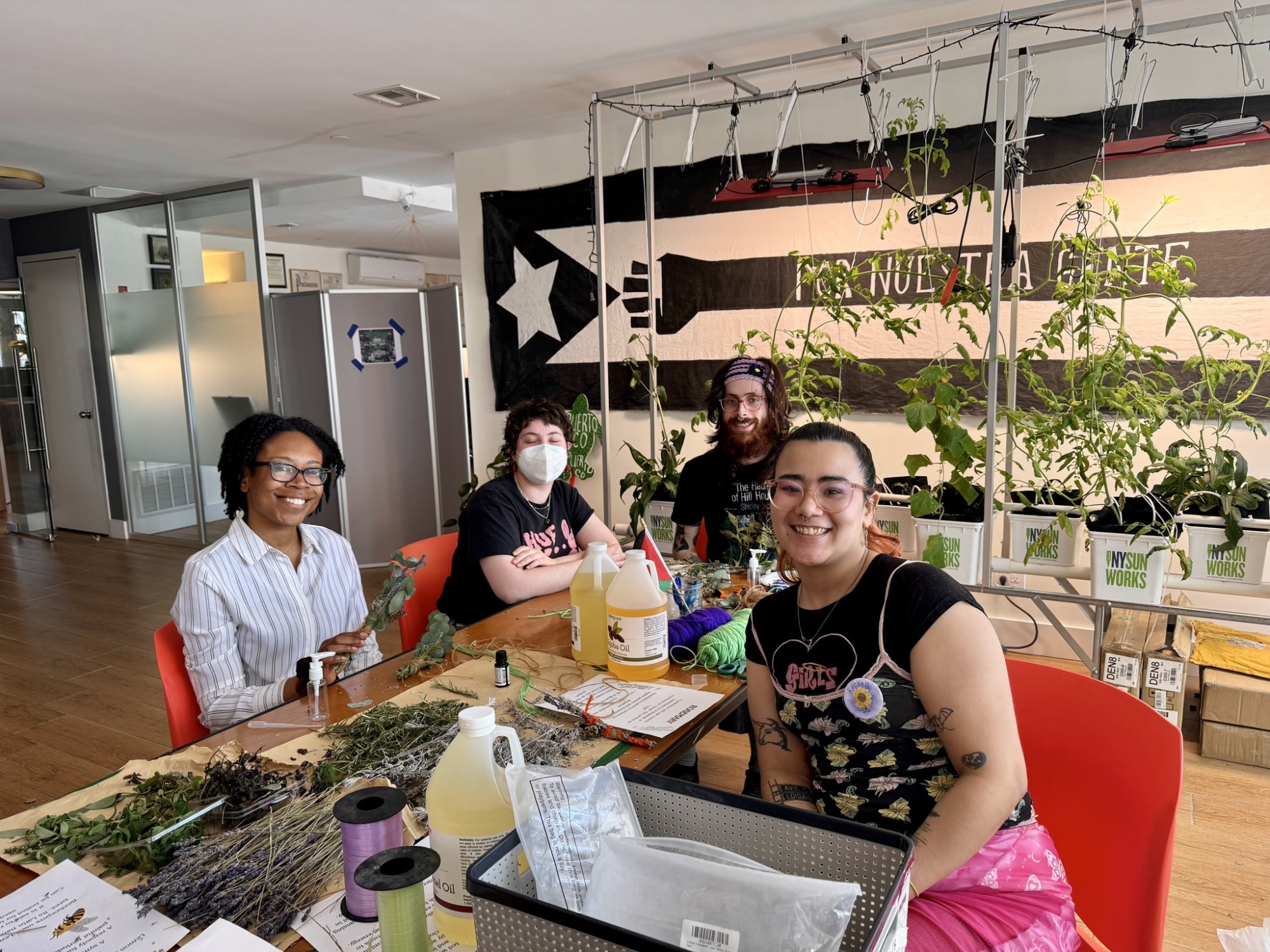
“Brooklyn Org’s support has been instrumental in making our community initiatives possible, with everything from cultural programming to mutual aid,” said Steiniger.
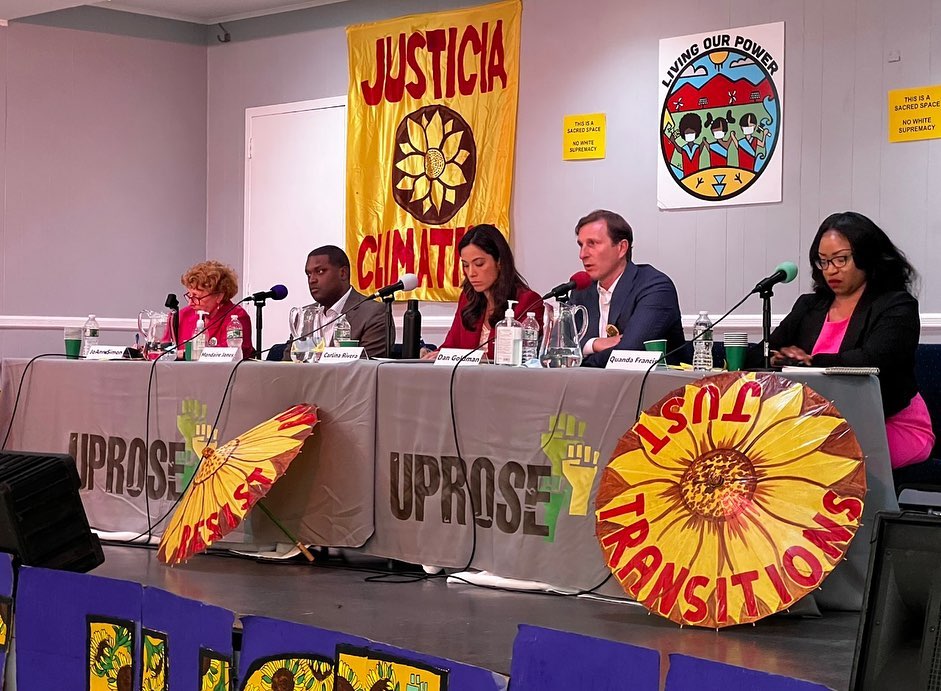
The solar grid’s completion marks another step towards UPROSE’s core mission of creating a “just transition” in Sunset Park, which is defined by the Climate Justice Alliance (CJA) as a vision-led, unifying and place-based set of principles, processes and practices that build economic and political power to shift from an extractive economy to a regenerative economy.
“UPROSE views sustainability as both an environmental and social necessity,” stated Nyiesha Mallett, organizer at UPROSE. “We really try to serve the entirety of the Brooklyn community…Most people think of environmental and climate issues as being totally separate from our daily lives, but it touches all of us. It’s everything from the water that we drink to the clothes that we wear and the air that we breathe.”
This approach to climate justice means that UPROSE works hand-in-hand with the Sunset Park community, connecting them with the resources they need to bring the community’s vision of the future to fruition.
The organization’s Just Transition Center, which “provides workforce development to the public and connects people with employment in the emerging regenerative economy,” connects residents with jobs in the emerging green economy, which includes everything from urban forestry to clean energy.
In an area with a median household income of just $56,787 as of 2016, these jobs are potential pathways to stability and long-term community ownership, which combat against gentrification attempts from industrial development projects such as Industry City.
Brooklyn Org’s support has been instrumental in making our community initiatives possible, with everything from cultural programming to mutual aid.Annecia Steiniger, Lead Organizer at UPROSE
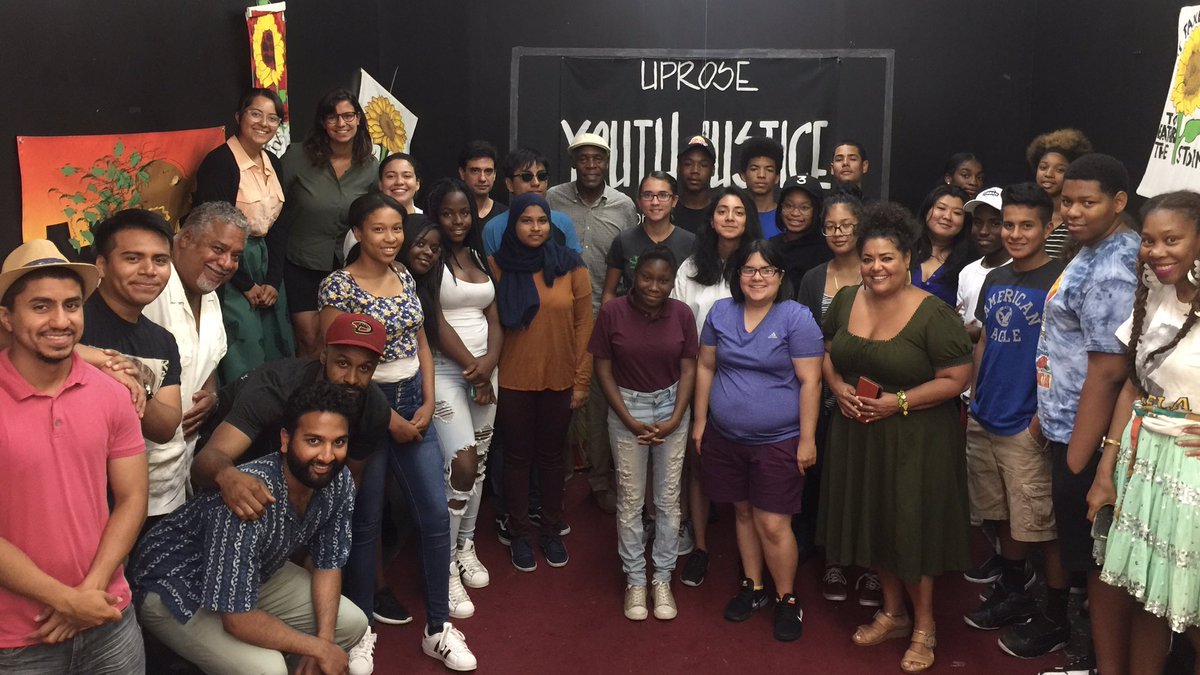
UPROSE’s commitment to long-term community empowerment extends beyond infrastructure and into the next generation of organizers. Over the past 5 years, the organization has trained more than 100 youth leaders of color in its Climate Justice Youth Training program, which, according to Steiniger, “differs from traditional youth organizing by empowering students to craft their own agenda and grow into leaders in their own right.”
The program’s curriculum covers the history of organizing in Sunset Park, the broader history of social justice movements in the United States, basic climate science, and more. While some of the organization’s 10 youth leaders this past summer were Sunset Park residents, many hailed from adjacent neighborhoods or other parts of Brooklyn entirely.
“They ranged from freshmen in high school to freshmen in college,” Steiniger noted, “which is something we try to do intentionally every year to create a diverse cohort that embodies a wide range of perspectives.”
In addition to its local youth initiatives, UPROSE has hosted eight NYC Climate Justice Youth Summits over the past 10 years, bringing together more than 3,000 teen organizers from across the city eager to learn how they can tackle the social and environmental issues their communities face. The summit highlighted the importance of both activism and art, featuring musicians and spoken-word artists alongside its speakers and panelists.
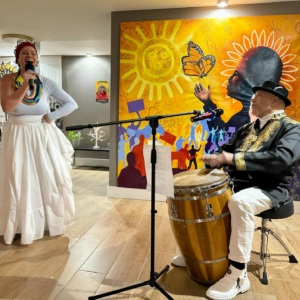
Nyiesha Mallett, one of UPROSE’s Climate Justice Organizers and a practicing artist herself, attested to the fact that “UPROSE puts the culture and art of its community at the center of its conversations about creating a just transition.”
In 2024, the organization’s Climate Justice Lives Here! Festival offered a vibrant mix of activities such as a fashion designer showcase, a kite-making competition, and a live DJ performance amidst an open discussion panel about its GRID 2.0 proposal. Mallett added that “funding from institutions like Brooklyn Org helps us create things like the Just Transition Center and Sunset Park Solar, but it also helps ignite cultural programming like our art builds and open mic nights, which build social cohesion.”
With a bright future on the horizon, UPROSE shows no signs of slowing down. The organization plans on continuing to strengthen the connection between economic and environmental sustainability through creative, community-centered initiatives.
Its recent GRID 2.0 Special Purpose District proposal urges New York City to transform Sunset Park’s industrial waterfront property into green spaces with employment opportunities and a smaller carbon footprint, and the organization is already making preparations to put the plan into action.
“One of our biggest challenges has been that the world really changed after Covid,” Steiniger laments. “The way that people view community, the way people engage in real life, was completely altered. But it feels like people are finally trying to rebuild those in-person connections, and that’s something we’re proud of making possible.”
This story was written by Luca Suarez.