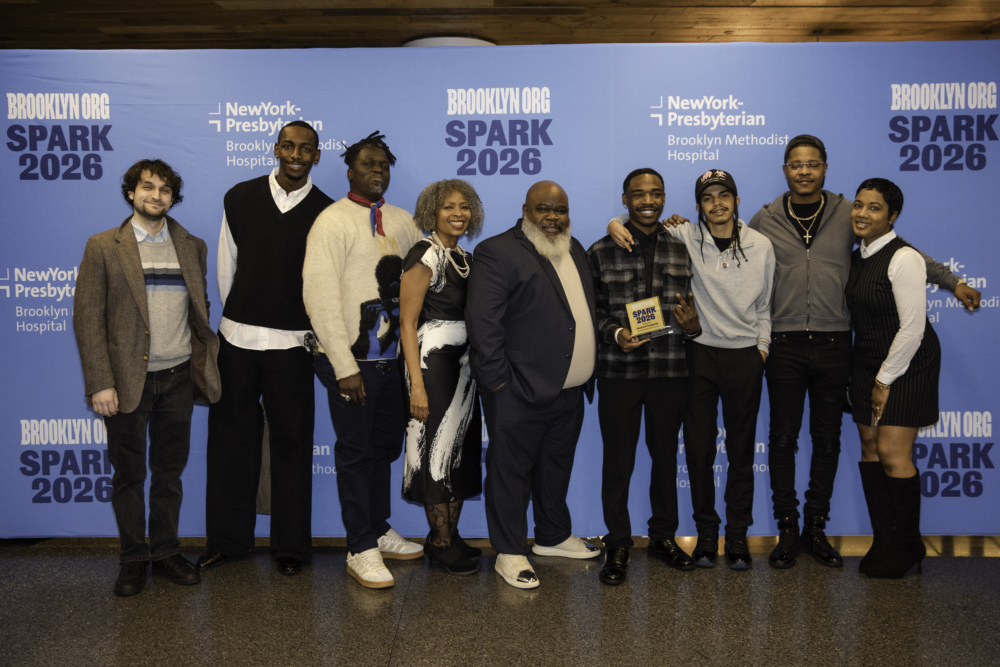
Brooklyn Paper 2026 Spark Prize Spotlight: Black Trans Femmes In The Arts Builds Creative Haven Amid National Debate Over Transgender Rights
As part of our grantmaking process, Brooklyn Org’s program team meets annually with nonprofit grantee partners to discuss their progress one year after receiving their award. This past fall, we met with 15 organizations that received funding from Brooklyn Org in 2024, and these conversations with our partners overwhelmingly showed that local organizations are standing up for Brooklyn and holding our communities together in times of great need.
Despite the challenges of declining federal funding, reductions in public benefits, attacks to the trans community and an increase in ICE raids and arrests, our grantee partners are stepping up their advocacy efforts and services to ensure communities across the borough can still receive critical, timely support support.
Throughout the past year, communities across Brooklyn experienced a notably increased ICE presence — with Bushwick, East New York, Brownsville, and Sunset Park particularly impacted. In response, BKO’s partners have expanded Know Your Rights trainings, participated in local ICE watch networks, shifted typically public open-door services (such as food pantries) to appointment-based models, and brought together neighbors to accompany community members to immigration court to help ensure the safety of undocumented residents. These efforts are further complemented by other grantee partners providing mental health support for immigrant communities, as well as translation assistance for individuals with new or ongoing legal cases.
Beyond immigration, our community partners are actively engaged in advocacy and program delivery to advance tenant, domestic workers and street vendor rights, influence criminal justice system reform, expand access to affordable housing, and support the well-being of Brooklyn’s youth, older adults and the trans community.
The needs of immigrant New Yorkers and our other vulnerable neighbors are often interconnected, and this is reflected in our partners’ approach as many of our grantees actively participate in coalitions and advocacy efforts at the local, state, and national levels. Out of the 15 organizations we met with last fall, 60% are members of coalitions, and 87% engage in advocacy across a wide range of issue areas.
Read below for updates on how our partners are working to advance housing rights, police and legal system reform, support for older adults, immigrant protections, connecting families with resources, workers’ rights, food security, healthcare access, and more:
While nonprofits continue to act as lifelines for our most vulnerable neighbors, they are doing this all in a time of financial uncertainty, as a notable trend in the sector this past year has been a decline in fundraising. In 2024, approximately one-third of our grantees experienced reductions of 3% to 55% in their operating budgets. Most of these decreases stem from losses in federal funding, while a smaller number result from shifts in national and international foundations’ priorities that led to discontinued support. Of the nonprofits we polled through our Brooklyn Backs Brooklyn – Nonprofit Survey (Fall 2025) — which included both BKO grantees and nonprofits we do not currently fund — 60% shared they experienced cuts in government funding over the past 12 months, with 42% reporting funding cuts of 20% or more. More than half of survey respondents said they are concerned about whether their organizations will be financially stable in 2026.
These are just a few examples of how our grantee partners are responding to community needs in real time, while also anticipating future challenges our borough has yet to face – which makes consistent, general operating support like the funding Brooklyn Org provides even more important than before.
We are proud to invest in this work to improve the lives of Brooklynites across the borough. Learn how you can join us to back Brooklyn and stay up-to-date on how we’re responding to community needs by signing up for our newsletter below: